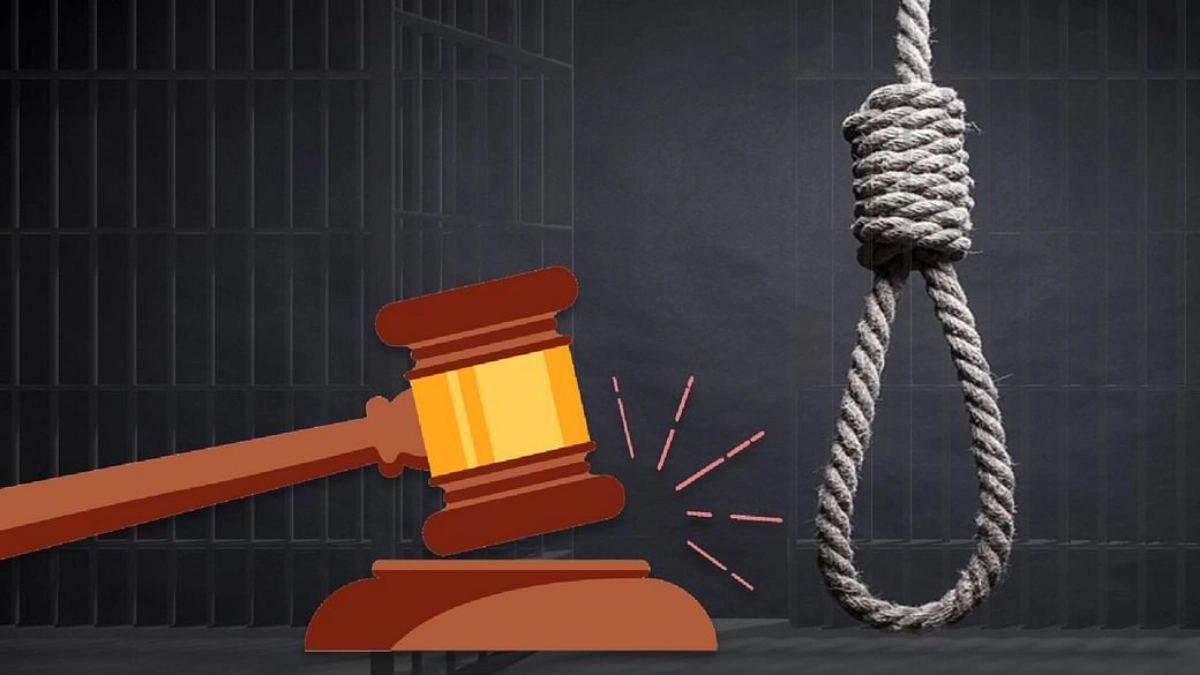

Few legal questions are as difficult as this one: can a state lawfully take a life as punishment for taking a life? Most countries have answered it through legislation or political consensus. Tanzania answered it in court — twice, with opposite results, in the space of a year.
The case was Mbushuu v Republic. It remains the most substantive judicial engagement with the death penalty in Tanzania’s legal history, and three decades later, it is still the authority on the question.
This article examines what happened, what each court decided, and why the disagreement between them matters.
Background: How the Question Reached the Courts
In 1991, two men — Mbushuu alias Dominic Mnyaroje and Kalai Sangula — were charged with the murder of a herdsboy, Saidi s/o Jingu, in Manyoni District. The prosecution alleged that the deceased was attacked, robbed of the cattle he was herding, and fatally wounded. He died before reaching hospital.
The matter proceeded before the High Court of Tanzania at Dodoma before Mwalusanya J. After a full trial, both accused were convicted of murder in May 1994. Under section 197 of the Penal Code, a conviction for murder carries a mandatory death sentence. Before that sentence was pronounced, defence counsel raised a constitutional objection: that the death penalty itself was unconstitutional, and therefore should not be imposed.
It was an unusual intervention — a challenge to the law rather than the verdict, raised at the sentencing stage. The court heard full submissions from both sides, with the Attorney General appearing to defend the constitutionality of the penalty. What followed was one of the most thorough judicial examinations of the death penalty in East African legal history.
The High Court’s Decision — Mwalusanya J, 1994
Mwalusanya J approached the question through three constitutional arguments advanced on behalf of the convicted men.
The right to dignity in execution
Article 13(6)(d) of the Constitution requires that human dignity be preserved in the execution of any punishment. The court examined in detail the process of execution by hanging — the method prescribed under section 26 of the Penal Code. The description placed before the court was graphic: the risk of decapitation if the drop is too long, strangulation if too short, the physical indignities at the moment of death. The court found that hanging, as a method of execution, offended the constitutional right to dignity.
Cruel, inhuman and degrading punishment
Article 13(6)(e) prohibits torture, inhuman punishment, and degrading punishment. The court found the death penalty offensive on two levels: inherently, and in its manner of execution.
On the inherent cruelty, Mwalusanya J drew on a body of international jurisprudence — decisions from the United States, Zimbabwe, Botswana, and international human rights instruments — to conclude that the death penalty, by its nature, constitutes cruel and inhuman punishment. He noted that the standard for what constitutes cruelty is not fixed but evolves with the development of society’s values.
On the manner of execution, the court examined conditions on death row in Tanzanian prisons: small cells, minimal diet, near total isolation, constant surveillance, and a wait of up to five years or more before sentence is carried out. The court found this prolonged period of anticipatory suffering to constitute a form of mental torture independent of the execution itself.
The right to life
The court considered whether Article 14 of the Constitution — which guarantees the right to life — rendered the death penalty unconstitutional on its face. On this point, Mwalusanya J was careful. Noting that the Swahili version of the Constitution is the authoritative text, he found that the right to life under Article 14 is not absolute but subject to law. The death penalty did not fail on this ground alone.
The Article 30(2) question
Even where a law limits a constitutional right, it may be saved by Article 30(2) if it is lawful and in the public interest. This was the critical battleground.
The court applied a two-part test drawn from the Court of Appeal’s earlier decision in Kukutia Ole Pumbun v AG: the law must not be arbitrary, and the limitation it imposes must be proportionate — no more than is reasonably necessary to achieve a legitimate purpose.
On proportionality, Mwalusanya J found that the death penalty failed the test. The evidence before him suggested that the deterrent effect of capital punishment was not demonstrably greater than that of life imprisonment. If society’s legitimate purpose is protection from violent crime, life imprisonment achieves that purpose without the irreversible consequences of execution.
On arbitrariness, the court identified three structural problems. First, Tanzania’s law made no distinction between those who kill with full criminal intent and those who kill while mentally ill — both were sentenced to death under the same provision. Second, the President’s power to commute or pardon was entirely unchecked — no guidelines, no obligation to follow judicial recommendations, no appeal against a decision to refuse clemency. Third, there was no mechanism for a condemned prisoner to challenge an arbitrary or discriminatory exercise of the presidential pardon power.
The court concluded that the Republic had failed to prove on a balance of probabilities that the death penalty was in the public interest or that it was prescribed by a lawful law. The death penalty was declared unconstitutional.
Both accused were sentenced to life imprisonment.
The Court of Appeal’s Response — 1995
Both sides appealed. The convicted men challenged their convictions on the grounds that the identification evidence was insufficient. The Republic cross-appealed the sentence, arguing that the death penalty was constitutional and should have been imposed.
The Court of Appeal — comprising Makame, Ramadhani and Lubuva JJA — addressed the conviction first.
The court examined the identification evidence carefully and found it seriously deficient. The primary identifying witnesses had themselves been arrested and charged in connection with the same incident, giving them a personal interest in deflecting blame. One of them had initially named a different person entirely when first asked about the animals found in his possession. The court found the witnesses unreliable and the identification of the appellants unsafe. The conviction for murder was quashed. Both men were acquitted.
The constitutional question, however, did not fall away. Because the Republic had formally cross-appealed the sentence and the ruling on constitutionality, the court was obliged to address it — and did so fully, producing a judgment that remains the binding authority on the subject.
Where the Court of Appeal agreed with Mwalusanya J
The appellate court did not dismiss the High Court’s reasoning on cruelty and inhumanity. On the contrary, it affirmed that the death penalty is inherently inhuman, cruel and degrading, and that the manner of its execution by hanging compounds that character. It agreed that the prolonged wait on death row, in the conditions documented before the court, constitutes serious suffering. It agreed that the privacy surrounding executions reflects an implicit acknowledgement that what is being done cannot bear public scrutiny.
On the core finding that the death penalty offends Articles 13(6)(d) and (e) of the Constitution, the Court of Appeal and the High Court were in agreement.
Where they diverged: Article 30(2)
The disagreement was entirely on whether the penalty was saved by Article 30(2).
The Court of Appeal applied the same two-part test — lawfulness and proportionality — but reached different conclusions on both.
On lawfulness, the court found that section 197 of the Penal Code is not arbitrary. A conviction for murder requires a full trial before the High Court, with prosecution counsel and defence counsel, followed by an automatic right of appeal. The process is structured, rule-bound, and subject to judicial oversight at every stage. That the law may produce outcomes that seem harsh — as in the case of accused persons with diminished mental capacity — does not make the law itself arbitrary, since the courts arrive at their decisions by following defined rules, not by accident or caprice.
On proportionality, the court took a different view from Mwalusanya J on a critical point: what measures are reasonably necessary to protect society is ultimately a question for society itself to determine, not one with a universal answer derived from the decisions of other jurisdictions. In a society like Tanzania — where citizens form vigilante groups to protect life and property, where the deterrent effect of the death penalty remains a matter of ongoing social consensus — the court was not persuaded that life imprisonment was demonstrably sufficient as a substitute. The death penalty, in that context, remained reasonably necessary.
The court was aware of the global movement toward abolition. It acknowledged that the death penalty has ugly aspects and that the direction of international opinion is toward abolition. But it held that this movement must be achieved through deliberate efforts to inform and shift public opinion — not through judicial decision alone.
The death penalty was declared constitutional. The striking out of the provision was quashed.
The Real Nature of the Disagreement
It is important to be precise about what the two courts actually disagreed on, because it is often mischaracterised.
They did not disagree on whether the death penalty is cruel. Both courts found that it is.
They did not disagree on the applicable legal test. Both applied the Kukutia framework of lawfulness and proportionality.
The disagreement was narrower and more specific: whether Tanzania’s social and institutional context, at that moment, made capital punishment reasonably necessary — and whether the structural problems in the law’s application rose to the level of arbitrariness sufficient to render it unlawful.
Mwalusanya J answered both questions in favour of the accused. The Court of Appeal answered both in favour of the State.
Both courts reasoned seriously. Neither was careless. The question was genuinely difficult, and the record of the disagreement reflects that.
The Position Today
The Court of Appeal’s decision in Mbushuu v Republic remains the binding authority. The death penalty in Tanzania is constitutional. It is provided for under the Penal Code and has not been legislatively repealed.
Any future change to this position would require either a legislative amendment abolishing or modifying the death penalty, or a fresh constitutional challenge producing a different result — which would require the Court of Appeal to depart from its own previous decision, a significant threshold in any jurisdiction.
The global debate continues to develop. International instruments, regional human rights bodies, and an increasing number of national courts have moved toward abolition or restriction. Whether and how those developments influence Tanzania’s legal and legislative landscape remains to be seen.
A Note on the Men at the Centre of the Case
There is an irony in the Mbushuu case that the legal analysis alone does not fully capture.
The men whose case produced Tanzania’s most authoritative ruling on the death penalty were ultimately freed — not because the penalty was declared unconstitutional, but because the evidence against them was found to be unsafe. Mbushuu and Sangula walked out of the Court of Appeal acquitted of murder. The constitutional question they raised, however, outlived their case entirely.
That is how law works. The question, once properly raised, belongs to the system — not to the individuals who brought it.
Conclusion
Mbushuu v Republic is worth knowing not because it is old, but because it is honest. Two courts, engaging seriously with one of the hardest questions in criminal law, produced reasoned and opposing conclusions. The High Court’s judgment is a careful argument for abolition. The Court of Appeal’s judgment is a careful argument for constitutional preservation. Both deserve to be read.
Tanzania’s legal position is settled. The debate that produced it was not simple, and understanding that debate is part of understanding the law itself.
LawCraft Attorneys advises on criminal, constitutional, and commercial legal matters across Tanzania. For guidance on a specific matter, contact us at info@lawcraft.co.tz or call +255 744 48 63 64.